A well-planted fig tree stands in the northwestern corner of the plot, and to reach the highest branches and the fruit closest to the sun you must step onto the old stainless steel stool. This is actually the stool’s secondary purpose. Mostly Baba Bonka sits upon it perched rather spryly when she prepares spring, summertime and early fall meals. In her old, flowered frock she peels and pares.
She washes and rinses in a stone sink, centered in the middle of the large yard. In its basin rests a bright green plastic bucket, which seems so out of place and anachronistic. It is the bucket that belongs to this modern world, and Baba Bonka who is not long for it. She belongs to the earth and it to her.
When she first met Bogomil in 1945 he was selling a piglet to her uncle. Her uncle had said that he was strange. He wanted to be educated in the West, and he returned from Austria with a different look in his eye. But, Bonka liked it. And, she knew that she would follow this scrawny young man with the crooked smile and straightforward manner.
He left to go back to school that summer, but he came back for her to take her West. The iron curtain came down, and they were behind it. And so they built a life, right there in the land of their fathers. Not the joyless, colorless life that one imagines under communism; they still laughed.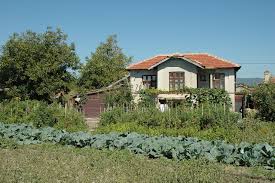 They built a house for themselves with the help of her father. They spent the extra money that they didn’t really have to cover the outside walls in stucco mixed with mica that sparkled in the sunlight and felt rough to the fingers. The earth was tilled and filled. A garden of time: moments spent planning, planting, pruning. Bogomil worked in the garden every day. When the babies came, Bonka pushed them in the carriage, back and forth, back and forth until they slept under the grape vines, full, ripe and purple with longing. Every summer they yielded the wine for the year. And the rest of the garden provided food throughout the seasons: pickled, dried, and preserved.
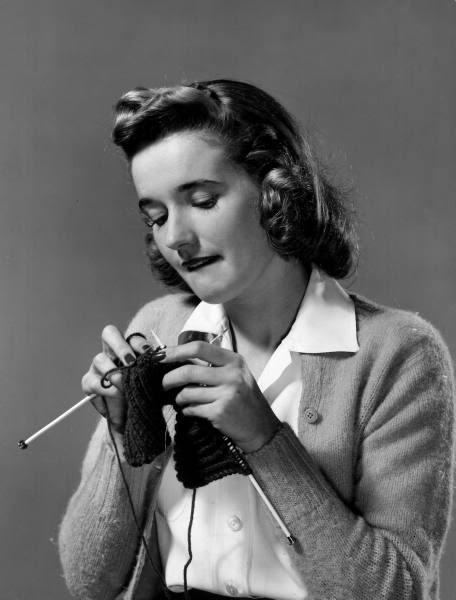
At night, Bonka sang in her chair and knitted warm woolen socks for her babies or kneaded the dough for tomorrow’s mekitsi. And, Bogomil worked by the stove in the corner. He faced the window and looked out over the garden as he worked. He drew up inventions, blueprints and plans. He would submit them to the bosses. He’d be rewarded with many silly-looking but official communist medals, but never any money. And, he never joined the party. And when the curtain fell, the house and the garden still stood.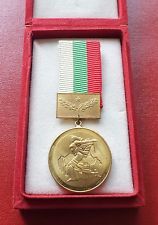 This was the way to live a life after all.
 Our Post-Cold War Marriage